You know the drill. The temperature finally hits that perfect window—not scorching, not chilly, just right. You head outside with your morning coffee or evening glass of wine, ready to finally enjoy your backyard. Within minutes, you’re either retreating from the sun that’s turned your patio into a broiler or swatting at the mosquitoes that found you the moment you sat down.
Sun and bugs. These two forces of Florida nature conspire to keep you indoors more than any other factors. The irony is brutal: you live in one of the most beautiful outdoor climates in the country, yet you spend most of your time experiencing it through windows.
Understanding exactly how sun and bugs affect your outdoor space—and what actually works to combat them—is the first step toward reclaiming your backyard.

The Florida Sun Problem: It’s Not Just Heat
When people complain about Florida sun, they usually focus on temperature. But heat is just one dimension of a multi-layered problem that makes outdoor spaces uncomfortable—and sometimes dangerous.
UV Radiation Intensity
Central Florida receives some of the most intense UV radiation in the continental United States. Our latitude combined with typically clear skies means UV exposure can reach extreme levels by mid-morning and stay dangerous well into late afternoon.
The implications extend beyond sunburn:
- Skin damage accumulates – Even brief unprotected exposure adds up over time
- Eye strain and damage – Prolonged bright light causes headaches and long-term vision problems
- Furniture and fabric fade – UV destroys outdoor cushions, rugs, and even wood finishes
- Electronics overheat – Phones, tablets, and outdoor TVs struggle in direct sun
Radiant Heat
Temperature doesn’t tell the whole story. When sun hits surfaces—concrete, pavers, stucco walls—those surfaces absorb heat and radiate it back. Your patio can feel 10-15 degrees hotter than the ambient temperature because you’re surrounded by heat-radiating surfaces.
This is why shade matters so much: blocking direct sun prevents surface absorption and dramatically reduces the radiant heat that makes patios feel like ovens.
Glare
Florida’s bright sun creates intense glare that makes outdoor activities difficult:
- Reading becomes impossible without squinting
- Screens on phones, tablets, and outdoor TVs wash out
- Conversations become strained when everyone’s squinting
- Pool glare can be blinding
The Timing Problem
Here’s what makes Florida sun especially frustrating: the most pleasant temperatures often coincide with the harshest sun angles.
- Morning: Comfortable temperatures but direct east-facing sun makes many patios unusable
- Midday: Overhead sun is partially blocked by patio covers, but temperatures peak
- Afternoon: Temperatures moderate slightly but low-angle west sun hammers most patios
- Evening: Finally comfortable—but now the bugs arrive
The Florida Bug Problem: Year-Round Assault
Unlike northern states where insects disappear for months, Florida’s bugs operate year-round. Understanding what you’re up against helps explain why standard solutions often fail—and why purpose-built protection matters.
Mosquitoes
Florida hosts over 80 mosquito species, and Central Florida’s lakes, wetlands, and afternoon rain create ideal breeding conditions. Key facts:
- Peak activity: Dawn and dusk—exactly when temperatures are most comfortable for humans
- Range: Most species fly 1-3 miles from breeding sites, so your neighbors’ standing water affects your yard
- Attraction: CO2 from breathing, body heat, sweat, and certain blood types all attract mosquitoes
- Disease risk: Florida mosquitoes can carry West Nile, Zika, and Eastern Equine Encephalitis
Citronella candles, tiki torches, and bug zappers provide minimal protection at best. Mosquitoes are attracted to you specifically—a candle 10 feet away doesn’t change the equation.
No-See-Ums (Biting Midges)
These tiny terrors—barely visible at 1-3mm long—pass right through standard window screens. Their bites cause intense itching that can last days. In Florida, they’re active year-round in coastal and wetland areas, with peak seasons in late spring and early fall.
Standard screen mesh won’t stop them. You need fine-weave insect mesh specifically designed to block these micro-pests.
Love Bugs
Twice yearly (May and September), Florida experiences love bug swarms. While they don’t bite, they swarm in overwhelming numbers, covering outdoor spaces and making any activity unpleasant. They’re also attracted to light colors and exhaust fumes, so they tend to congregate around patios and outdoor kitchens.
Other Flying Pests
The supporting cast of Florida’s flying pest population includes:
- Yellow flies – Painful biters active during warm months
- Horse flies – Large, aggressive biters near water
- Wasps and hornets – Attracted to food and sugary drinks
- House flies – Present year-round, attracted to food prep areas
- Gnats – Swarm around faces and eyes, especially near plants
Why Standard Solutions Fail
Bug sprays and DEET: Effective but require constant reapplication. Who wants to coat themselves in chemicals every time they step outside? And they don’t stop bugs from buzzing around your food and drinks.
Citronella and torches: Studies show minimal effectiveness. They may create a slightly less attractive zone, but mosquitoes will still find you.
Bug zappers: Research shows they kill primarily beneficial insects while mosquitoes largely ignore them. The satisfying zap sound is mostly moths and beetles.
Fans: Moving air helps somewhat—mosquitoes are weak fliers—but fans don’t create complete protection and don’t help with other pests.
Professional spraying: Provides temporary relief but must be repeated regularly, affects beneficial insects, and doesn’t prevent mosquitoes from neighboring properties.
Key Takeaways
- Florida sun is multi-dimensional – UV radiation, radiant heat, and glare all contribute to discomfort
- Timing works against you – Pleasant temperatures coincide with harsh sun angles or peak bug activity
- Florida has 80+ mosquito species – Active at dawn and dusk, exactly when temperatures are nicest
- No-see-ums pass through standard screens – You need fine-weave insect mesh for complete protection
- Sprays and candles don’t work – Physical barriers are the only reliable bug solution
- Retractable products solve both problems – Screens for bugs, awnings and shades for sun
- On-demand protection is key – Retractable means you choose when to use it
Solutions That Actually Work
The only reliable protection against Florida’s sun and bugs is physical barriers—blocking sun rays and creating screens that pests cannot penetrate. Retractable products provide this protection with the flexibility to deploy when needed and retract when you want an open-air experience.
For Bug Protection: Retractable Screens
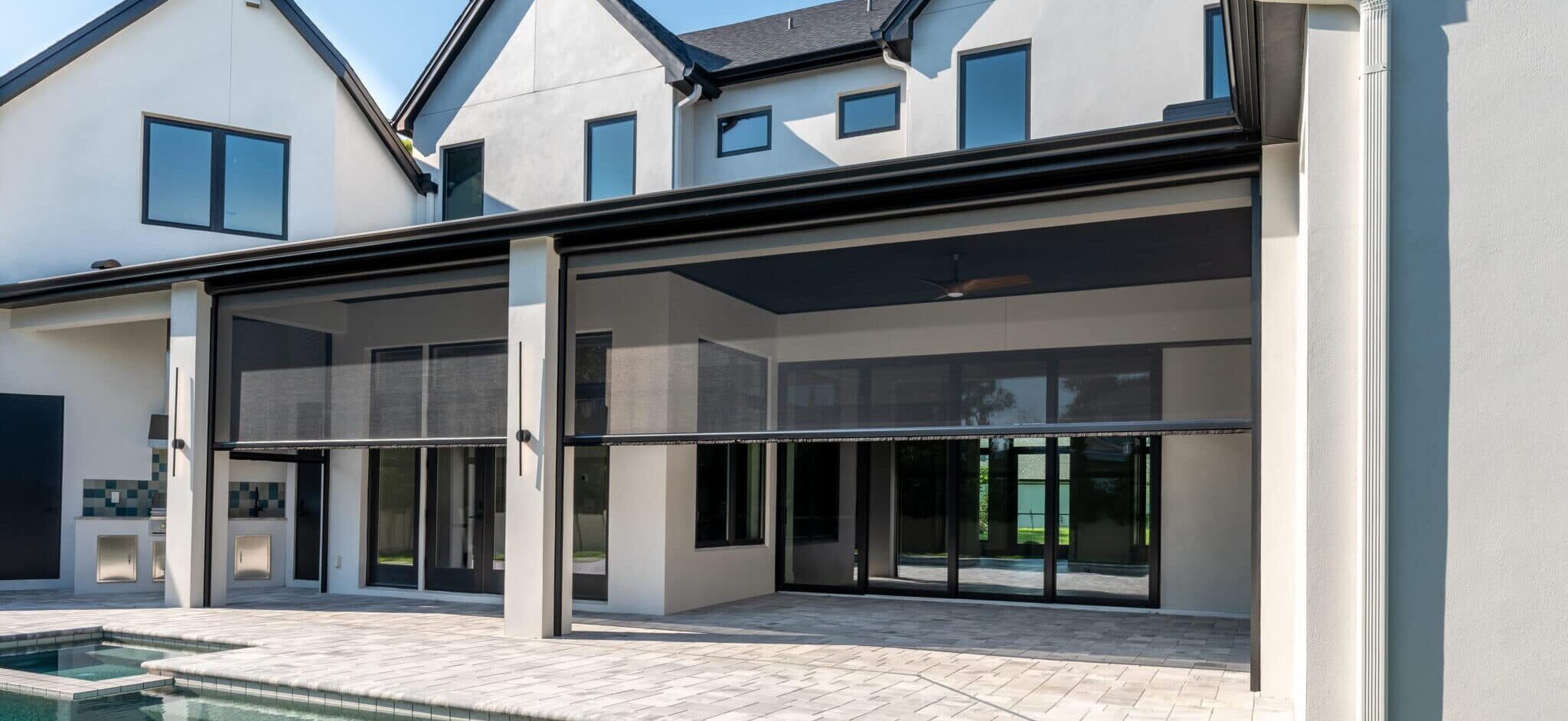
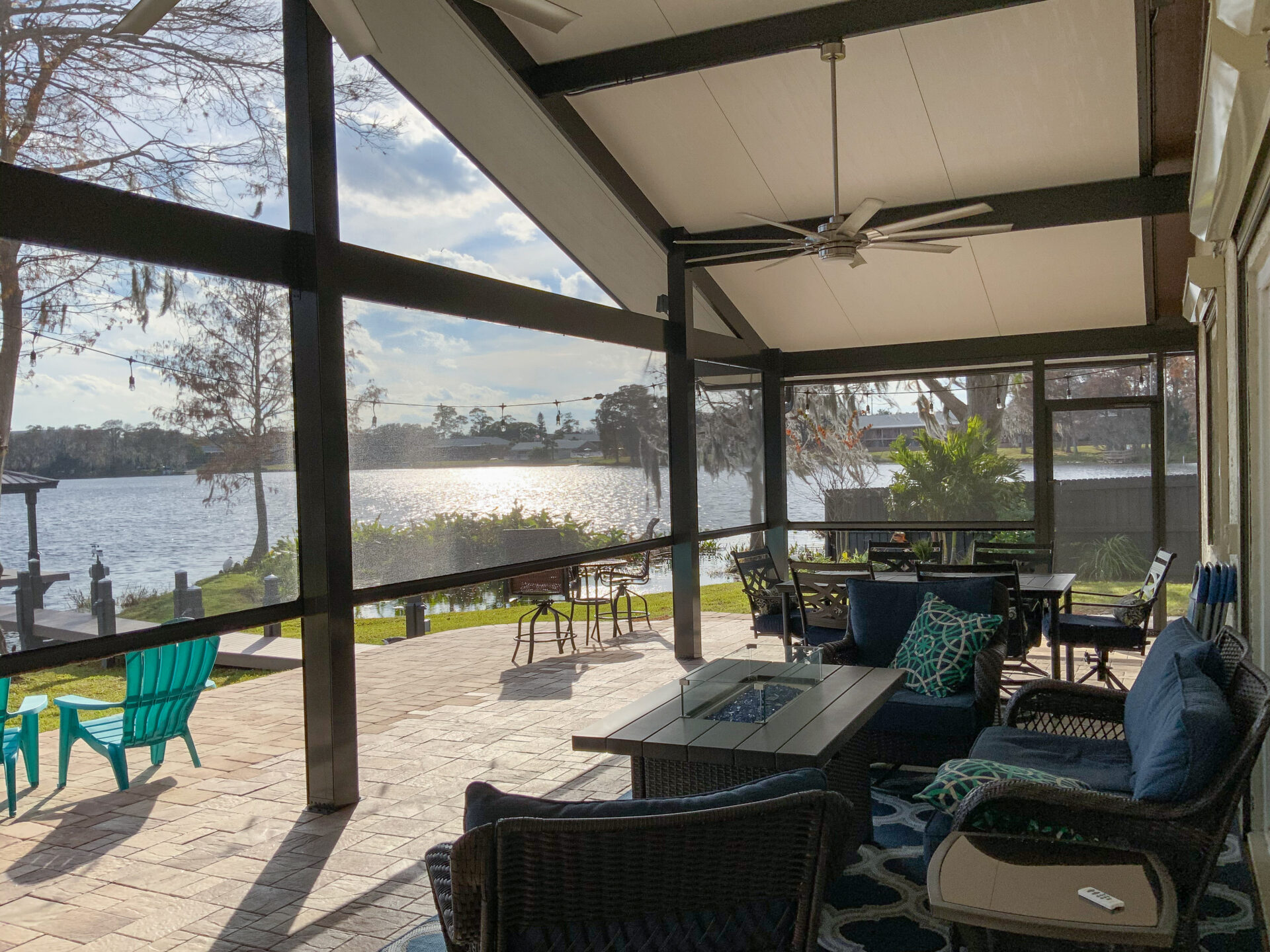
Motorized retractable screens create an impenetrable barrier between you and every flying pest in Florida. Unlike permanent screen enclosures, they deploy only when needed—giving you protection at dusk while allowing full open-air enjoyment during bug-free hours.
How they work:
- Screens roll into compact housings mounted at the ceiling/header line
- When deployed, they create a complete enclosure with no gaps for insects
- Tracks along sides and weighted bottom bars prevent pest entry
- One button press deploys or retracts in seconds
Mesh options for different needs:
- Insect mesh: Fine weave blocks mosquitoes, no-see-ums, and other flying pests while maximizing visibility and airflow. The most popular choice for Florida homeowners.
- Solar mesh: Tighter weave provides bug protection PLUS significant heat and UV reduction. Ideal for spaces that need both.
Why screens beat other solutions:
- No chemicals on your skin or in your air
- Protects everyone in the space, not just individuals
- Stops bugs from landing on food and drinks
- Creates truly pest-free zones, not just “reduced” pest areas
- Works against all flying insects, not just mosquitoes
For Sun Protection: Retractable Awnings
Motorized retractable awnings provide instant shade that blocks direct sun and reduces radiant heat from surrounding surfaces. Unlike permanent structures, they give you control—full shade when the sun is brutal, full sun when you want it.
How they work:
- Fabric extends from a housing mounted above your patio
- Projection of 10-16 feet provides substantial shade coverage
- Partial extension allows fine-tuned coverage
- Retracted position is nearly invisible
Benefits beyond temperature:
- Blocks UV radiation that causes skin damage and furniture fade
- Eliminates glare for reading, screen viewing, and conversation
- Reduces heat transfer into your home, lowering cooling costs
- Creates usable outdoor space during previously unusable hours
For Low-Angle Sun: Retractable Shades
Motorized retractable shades drop vertically to block low-angle morning and evening sun that awnings can’t reach. They’re the solution for east and west exposures that get hammered by sun at angles too low for overhead coverage.
When shades matter most:
- Morning coffee on an east-facing patio
- Afternoon relaxation on a west-facing space
- Any time low sun creates blinding glare
- When you need both overhead shade (awning) and side protection (shade)

Combining Solutions for Complete Protection
Many outdoor spaces benefit from multiple products working together:
The Bug-Free Shaded Patio
Retractable screens on all open sides plus a retractable awning for overhead shade. Deploy screens at dusk when bugs arrive; use the awning whenever sun is a problem. Each product operates independently—use one, both, or neither depending on conditions.
The All-Day Outdoor Room
Screens for bug protection, awning for overhead sun, shades for low-angle sun. This configuration handles any time of day: morning coffee (shades block east sun, screens keep bugs out), afternoon entertaining (awning provides overhead shade), evening dining (screens deployed, awning optional).
Smart Integration
Multiple products can be programmed to work together:
- “Sunset Mode” deploys screens automatically when bugs become active
- Wind sensors retract awnings when gusts exceed safe levels
- Sun sensors extend shades when UV reaches certain thresholds
- All products controllable from a single remote or smartphone app
What Changes When Sun and Bugs Aren’t Problems
Consider how your outdoor life transforms:
Morning: You actually use your patio for coffee instead of drinking it at the kitchen counter. The shade is there; the bugs aren’t out yet. You read the news outside because there’s no glare.
Afternoon: Instead of avoiding your backyard during peak sun hours, you extend the awning and work on your laptop outside. The kids play in a shaded, protected area instead of being stuck indoors.
Evening: This is the transformation that matters most. You can finally enjoy those perfect Florida evenings without becoming a mosquito buffet. Dinner happens outside—start to finish. Friends stay for drinks after dark. The evening isn’t cut short by bugs.
Weekend: Outdoor entertaining becomes effortless. The game is on the outdoor TV without glare. The grill is going without everyone swatting flies. Guests can actually sit and relax instead of constantly repositioning to find shade or escape bugs.
Why Central Florida Homeowners Choose New Horizons
For over 21 years, New Horizons has been solving Florida’s sun and bug problems for Central Florida homeowners. Recently featured in Florida Home Magazine, we understand exactly what it takes to make outdoor spaces usable in our unique climate.
- Florida-specific expertise – Products selected and installed for our climate conditions
- 800 sq ft showroom – See screens, awnings, and shades in action before you buy
- Complete solutions – Screens, awnings, shades, and more from one provider
- Professional installation – Factory-trained employee installers ensure everything works perfectly
- Lifetime Warranty – Exclusive coverage on frame, mesh, motor, and controls
- Local service – We’re here for maintenance, adjustments, and support
Stop Choosing Between Inside and Outside
You shouldn’t have to pick between enjoying your outdoor space and being comfortable. Sun and bugs are solvable problems—you just need the right solutions.
Schedule a free consultation and we’ll assess your specific challenges. Which direction does your patio face? When do bugs hit hardest? What would make your outdoor space actually usable? We’ll recommend targeted solutions based on your situation, not a one-size-fits-all approach.
Or visit our Winter Park showroom to see retractable screens and awnings in action. Test the controls, feel the mesh quality, and discover what’s possible.
Showroom hours: Monday–Friday, 8:30 AM to 4:30 PM
Location: 4970 N. Pine Avenue, Winter Park, FL 32792
Call us at (407) 562-7800 or request your consultation online.
Your backyard is waiting. Let’s make it usable.
Frequently Asked Questions
Will retractable screens really stop no-see-ums?
Yes—if you use the right mesh. Our insect mesh is specifically designed with a fine enough weave to block no-see-ums (biting midges), not just larger mosquitoes. Standard window screen mesh allows these tiny pests through; proper insect mesh does not.
How much cooler does shade make a patio?
Shaded patios typically feel 10-15 degrees cooler than those in direct sun. This is partly due to blocking direct radiation and partly due to reducing heat absorption by surrounding surfaces. The difference between “unbearable” and “comfortable” is often simply shade.
Can I use screens during the day and awnings in the evening?
Absolutely. Each product operates independently. Use screens when bugs are active (typically dawn and dusk), awnings when sun is the problem (typically midday to late afternoon), or both when needed. You control what’s deployed at any time.
Do I need both screens AND awnings, or is one enough?
It depends on your specific challenges. If bugs are your main issue and sun isn’t bad (perhaps you have good natural shade), screens alone may be sufficient. If sun is brutal but bugs aren’t a major problem, an awning might be all you need. Many homeowners eventually add both because they solve different problems.
How do retractable products handle Florida’s afternoon storms?
Awnings should be retracted during storms—wind sensors can do this automatically. Screens can typically remain deployed during rain (they let water through while blocking bugs), but should be retracted in high winds. Products are designed for easy deployment and retraction so storm prep takes seconds, not hours.
What about during hurricane season?
Retractable screens and awnings retract into protective housings during severe weather. For comprehensive storm protection, consider motorized hurricane shutters that protect your entire outdoor investment from hurricane-force winds and debris.