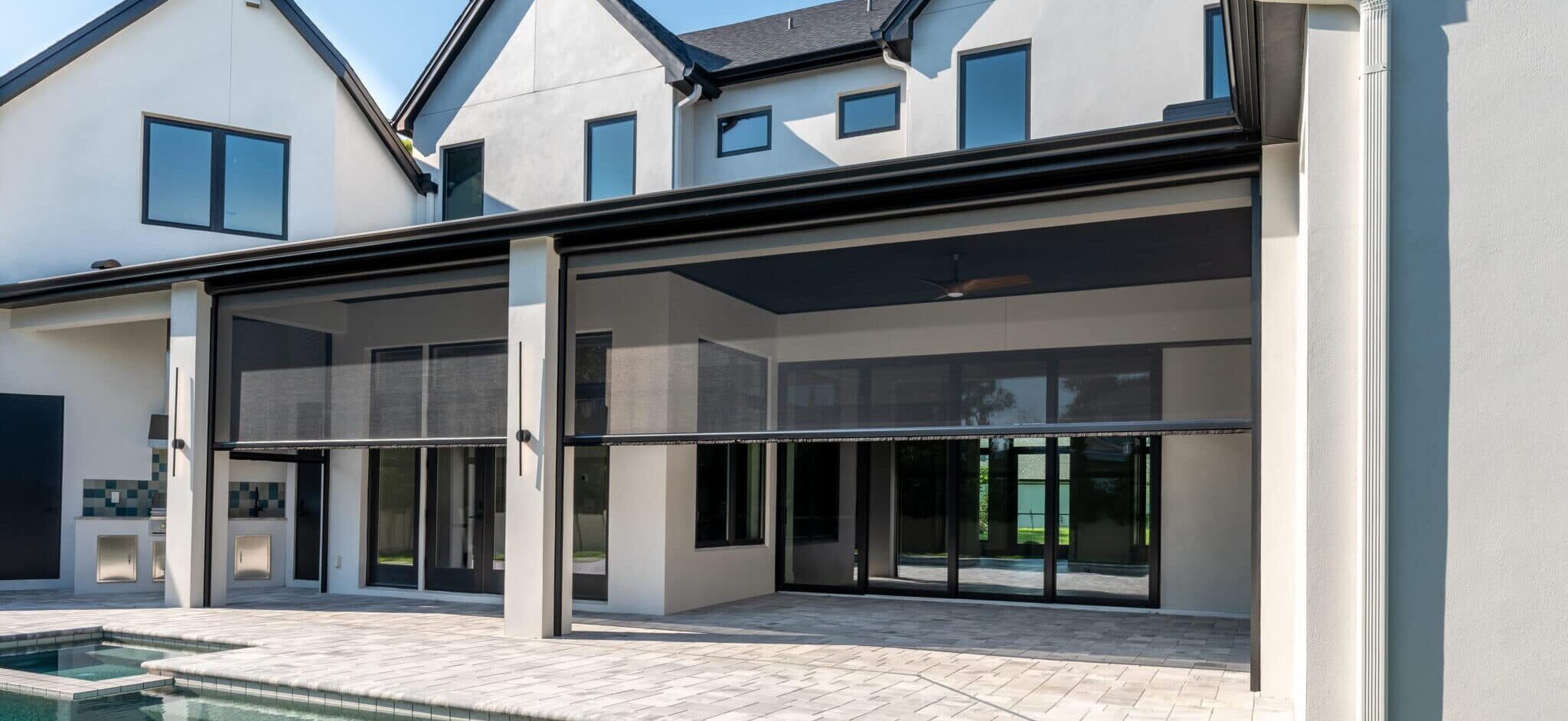
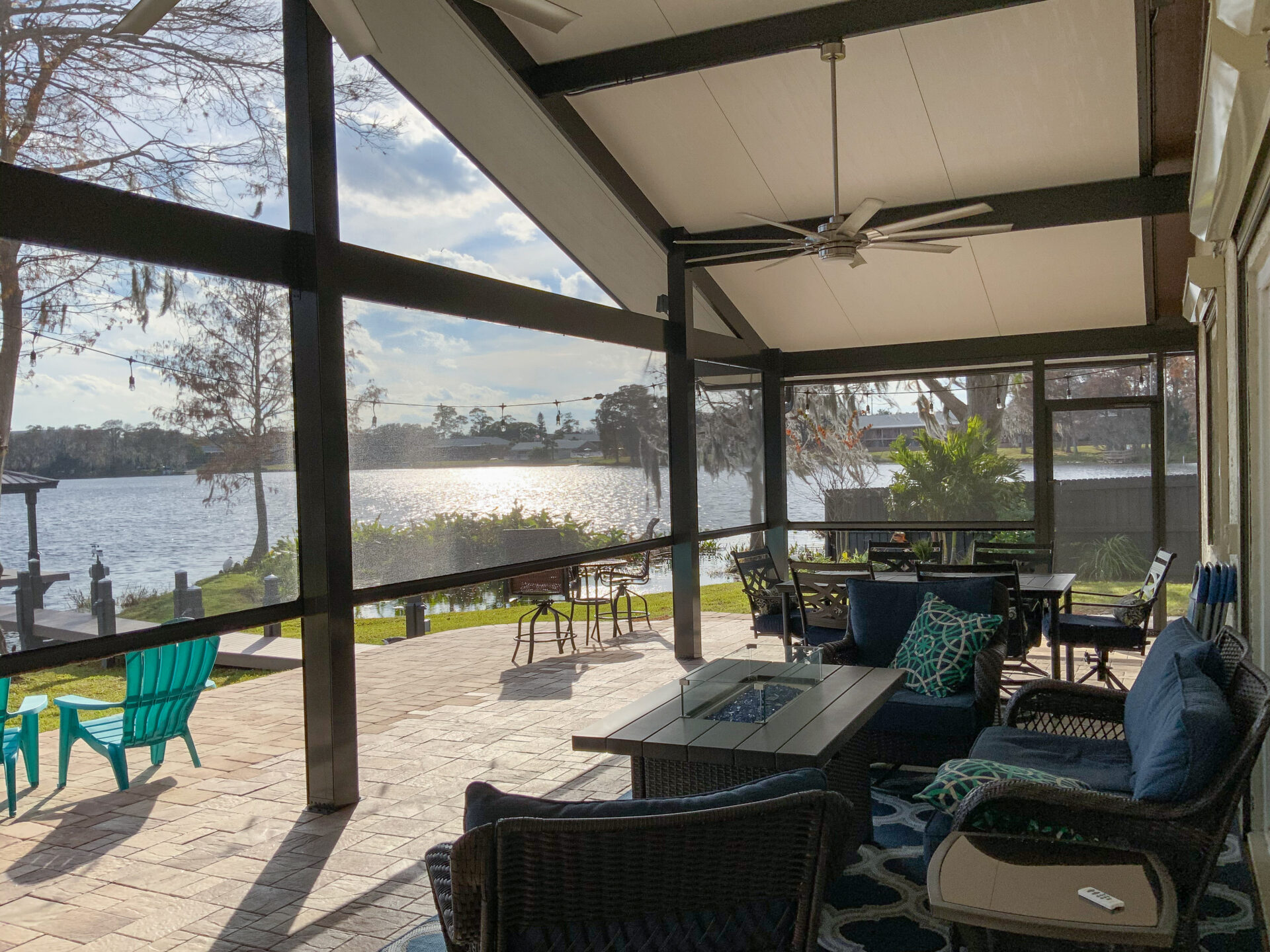
If you live in Florida, you probably have a lanai. That screened outdoor room is practically a requirement of Florida homeownership—a space that promises year-round outdoor living protected from bugs and debris. But if you’re honest, how much do you actually use your lanai?
For many homeowners, the answer is “not as much as we’d like.” The screen enclosure handles bugs, but it doesn’t solve the other challenges that make lanais uncomfortable: the relentless Florida sun beating through the screen roof, the heat that builds up with no shade relief, and the afternoon storms that turn lanai time into a gamble.
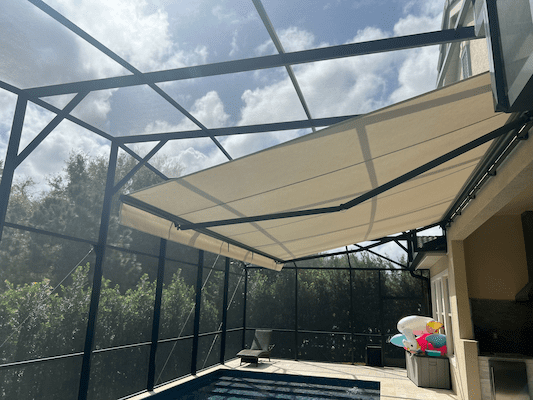
A motorized retractable awning changes everything. It transforms your lanai from a space you visit occasionally into a room you live in daily—comfortable, functional, and beautiful.
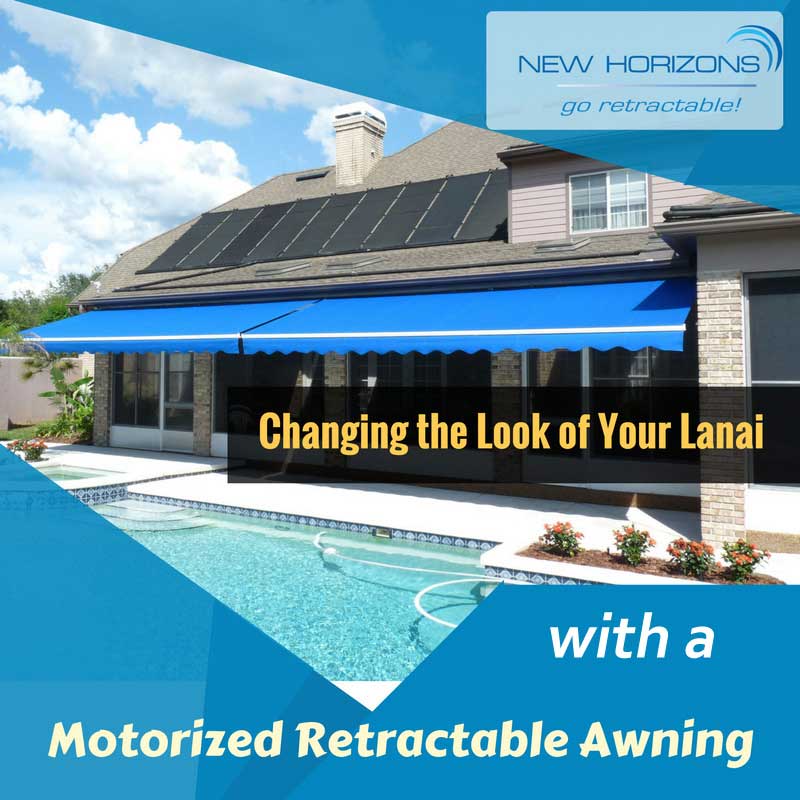
The Florida Lanai Problem
Lanais are wonderful in concept: outdoor living space protected by screen enclosures that keep bugs and debris out while letting breezes in. But standard lanais have limitations that affect usability:
Sun Penetration
Screen enclosure roofs are typically screen or clear panels—neither provides meaningful shade. The Florida sun streams through, creating the same heat and UV exposure you’d experience on an open patio. During peak hours, this makes lanais uncomfortably hot.
Limited Shade Options
Traditional shade solutions don’t work well in lanais:
- Umbrellas: Block only small areas, need constant repositioning, look cluttered
- Permanent structures: Reduce flexibility, may conflict with existing enclosure design
- Shade sails: Difficult to install inside enclosures, often look temporary
The Flexibility Dilemma
Sometimes you want shade; sometimes you want sun. Morning coffee might be pleasant with gentle sun, while afternoon use requires protection. Permanent shade solutions don’t adapt to these changing needs.
Aesthetic Limitations
Many lanais look functional but not beautiful. They become storage spaces with patio furniture rather than designed living areas. The potential for a stunning outdoor room goes unrealized.
How Retractable Awnings Transform Lanais
Motorized retractable awnings solve these problems while adding style and sophistication to your outdoor space.
Shade On Demand
This is the core benefit: shade when you want it, sun when you don’t.
- Morning: Retracted for gentle morning sun with breakfast
- Midday: Extended for full protection during peak heat
- Afternoon: Partial extension fine-tunes coverage as sun angle changes
- Evening: Retracted to enjoy sunset views and cooler temperatures
One button press extends or retracts the awning. No manual cranking, no wrestling with mechanisms—just effortless control of your environment.
Dramatic Temperature Reduction
Shaded areas feel 10-15 degrees cooler than direct sun exposure. For a lanai that was previously uncomfortably hot during afternoon hours, this temperature drop transforms usability:
- Peak afternoon hours become usable instead of avoided
- Furniture stays cooler to the touch
- Air movement from fans becomes more effective
- Overall comfort increases dramatically
UV Protection
Quality awning fabrics block 95%+ of harmful UV radiation:
- Protects skin from sun damage during extended outdoor time
- Prevents fading of outdoor furniture, cushions, and rugs
- Reduces eye strain and glare
- Makes reading, working, and screen viewing comfortable
Aesthetic Transformation
Beyond function, awnings change how your lanai looks and feels:
- Defines the space as a designed room rather than screened area
- Adds architectural interest and visual appeal
- Available in hundreds of colors and patterns to match any style
- Creates a finished, intentional appearance
Key Takeaways
- Lanais have limitations – Screen roofs don’t provide shade or heat relief
- Retractable awnings solve the shade problem – Sun when you want it, shade when you need it
- Temperature drops 10-15 degrees – Makes peak hours usable instead of unbearable
- UV protection – Protects skin and prevents furniture fade
- Aesthetic upgrade – Transforms lanai from functional space to designed room
- Works inside existing enclosures – Mounts to screen enclosure structure or house
- Combine with screens and shades – Additional products enhance lanai further
- One-touch motorized control – Effortless operation encourages daily use
Installing Awnings in Lanais
Awning installation in lanai settings requires consideration of the existing screen enclosure. Here’s how it typically works:
Mounting Options
House-mounted: Awning attaches to the house wall above the screen enclosure entry point or inside the enclosure at the roofline. This provides stable mounting to the primary structure.
Enclosure-mounted: In some cases, awnings can mount to the screen enclosure frame itself, provided the frame has adequate structural capacity. This option works when house-mounting isn’t feasible.
Coverage Considerations
Awning size depends on your lanai dimensions and shade goals:
- Width: Awnings can span up to 40+ feet for large lanais
- Projection: 10-16 feet of extension provides substantial coverage
- Multiple awnings: Larger lanais may benefit from multiple units
Fabric Selection
Awning fabrics come in various options for different priorities:
- Solid colors: Clean, classic appearance
- Striped patterns: Traditional awning aesthetic
- UV-blocking fabrics: Maximum sun protection
- Light-filtering options: Reduced heat while allowing filtered light
Colors range from classic white and beige to bold accent colors that complement your home’s exterior palette.
Beyond Awnings: Complete Lanai Enhancement
While awnings transform shade control, additional products can address other lanai challenges:
Retractable Screens for Enhanced Bug Protection
Standard screen enclosures use relatively open mesh that allows some smaller insects through. Retractable screens with fine-weave insect mesh can create zones of enhanced protection within your lanai:
- Block no-see-ums that pass through standard screen
- Create bug-free dining or seating areas
- Deploy only when needed, retract for open feeling
Retractable Shades for Side Sun
Retractable shades block low-angle sun that enters through screen enclosure sides:
- Morning sun on east-facing walls
- Afternoon sun on west-facing walls
- Privacy from neighboring properties
Vinyl Panels for Weather Protection
Retractable vinyl panels can create weather-protected zones within your lanai:
- Block wind and rain from entering
- Temperature control during cooler months
- Maintain clear views through transparent vinyl
Combination Approaches
The most functional lanais often combine multiple products:
- Awning + fine-mesh screens: Shade plus enhanced bug protection
- Awning + side shades: Complete sun control from any angle
- Full package: Awning, screens, shades, and vinyl panels for ultimate flexibility
The Lifestyle Transformation
With a properly enhanced lanai, your daily life changes:
Morning Routine
Coffee on the lanai becomes standard practice instead of occasional treat. Gentle morning sun filtered through the screen, awning ready to extend if needed. You read the news, check emails, or just enjoy the quiet—all outside.
Afternoon Productivity
Work from home? Your lanai becomes a viable office space. Awning extended for shade, comfortable temperature maintained, natural surroundings instead of four walls. Studies show outdoor work environments boost creativity and reduce stress.
Evening Entertaining
Dinner parties happen outside naturally. Shade when needed, bug protection from the enclosure (enhanced by fine-mesh screens if desired), comfortable temperatures, beautiful setting. Guests stay outside instead of gravitating indoors.
Weekend Living
Saturday mornings stretch into afternoons on the lanai. Kids play comfortably. Adults relax and read. The grill gets used. The TV (if you have an outdoor setup) is viewable without glare. The lanai becomes the center of home life, not a room you walk through on the way to the pool.
Design Considerations for Your Lanai
When planning lanai enhancements, consider these design factors:
Color Coordination
Awning fabric and frame colors should complement:
- House exterior colors (roof, trim, stucco)
- Screen enclosure frame color
- Outdoor furniture and decor
- Pool cage elements if applicable
Scale and Proportion
Awning size should feel proportional to your lanai:
- Coverage should protect key seating/dining areas
- Avoid overwhelming smaller spaces with massive awnings
- Consider sight lines when awning is retracted
Furniture Arrangement
Plan furniture placement around your shade coverage:
- Position main seating under awning protection
- Create distinct zones (dining, lounging, activities)
- Consider traffic flow with awning extended
Lighting Integration
LED lighting can be integrated into awning systems:
- Dimmable lights along the awning bar
- Ambient lighting for evening use
- Controlled alongside awning operation
Why Central Florida Homeowners Choose New Horizons
For over 21 years, New Horizons has been enhancing Central Florida lanais with motorized retractable awnings. Recently featured in Florida Home Magazine, we understand the unique characteristics of Florida’s outdoor living spaces.
- Lanai expertise – We’ve installed in countless Florida screen enclosures
- 800 sq ft showroom – See awnings and other products in action
- Custom sizing – Every awning built to your specific dimensions
- Color matching – Help coordinating fabrics with your home’s palette
- Professional installation – Factory-trained employee installers
- Lifetime Warranty – Exclusive coverage on frame, fabric, and motor
- Local service – Ongoing support and maintenance
Transform Your Lanai
Your lanai has potential you haven’t fully realized. With the right awning—and possibly complementary products—it becomes the outdoor room you imagined when you bought your Florida home.
Schedule a free consultation and we’ll assess your lanai, discuss your goals, and recommend solutions that transform how you use and enjoy your outdoor space.
Or visit our Winter Park showroom to see awnings in action. Compare fabrics, test controls, and visualize possibilities for your lanai.
Showroom hours: Monday–Friday, 8:30 AM to 4:30 PM
Location: 4970 N. Pine Avenue, Winter Park, FL 32792
Call us at (407) 562-7800 or request your consultation online.
Learn more about our retractable awnings and start transforming your lanai today.
Frequently Asked Questions
Can awnings be installed inside existing screen enclosures?
Yes—this is one of the most common installation scenarios in Florida. Awnings typically mount to the house wall inside the enclosure or, in some cases, to the screen enclosure frame itself. We assess your specific enclosure during consultation to determine the best mounting approach.
Will the awning interfere with my screen enclosure?
Properly sized and installed awnings complement screen enclosures without interference. When retracted, awnings sit flush against the mounting surface. When extended, they provide shade within the enclosure space. We ensure proper clearances for smooth operation.
How do I choose the right awning size for my lanai?
Size depends on your lanai dimensions, the areas you want shaded, and mounting options. During consultation, we measure your space and recommend sizing that provides appropriate coverage without overwhelming the area. Multiple smaller awnings sometimes work better than one oversized unit.
What happens to the awning during storms?
Retract awnings before storms—the fabric and frame are protected inside the housing. Wind sensors can automate this, retracting the awning when gusts exceed safe thresholds even when you’re away. The retraction process takes about 30 seconds.
How do awnings handle Florida’s humidity?
Quality awning fabrics are treated for mold and mildew resistance. Aluminum frames won’t rust or corrode. We select products specifically suited for Florida’s humid conditions. Regular cleaning (rinsing with water) prevents any buildup.
Can I add other products to my lanai later?
Absolutely. Many homeowners start with awnings for shade, then add screens for enhanced bug protection or shades for side sun control as they discover additional needs. Products can be added incrementally without affecting existing installations.